

As a seasoned supplier in the dough machine industry, I've witnessed firsthand the diverse kneading actions that these remarkable machines can offer. The kneading process is a crucial step in bread - making and other dough - based food production, and understanding how the kneading action varies is essential for both small - scale bakeries and large - scale food manufacturers.
1. Types of Kneading Actions
Spiral Kneading
Spiral kneading is one of the most common kneading actions in modern dough machines. In a spiral kneader, a spiral - shaped agitator rotates within the dough bowl. This design allows the dough to be continuously pushed towards the center of the bowl and then back out to the edges. The spiral motion mimics the natural kneading action of human hands to some extent. It gently stretches and folds the dough, creating a smooth and elastic texture.
The benefit of spiral kneading is its efficiency. It can quickly develop the gluten in the dough, which is essential for the structure and rise of bread. For example, in a commercial setting where large batches of dough need to be prepared, a Dough Mixer Commercial with a spiral kneading mechanism can save a significant amount of time. However, it should be noted that over - kneading can occur if the machine runs for too long, as the intense and continuous action may break down the gluten structure.
Planetary Kneading
Planetary kneading operates on a different principle. In a planetary mixer, the agitator moves in a circular path around the center of the bowl while also rotating on its own axis. This double - motion action ensures that the dough is thoroughly mixed from all angles. The agitator reaches every corner of the dough bowl, ensuring an even distribution of ingredients.
Planetary kneading is often preferred for lighter doughs, such as cake batters and some types of pastry dough. The gentle yet comprehensive mixing action prevents over - development of gluten, which could make the final product tough. A small - scale bakery might find a Small Dough Rounder Machine with a planetary kneading system ideal for preparing a variety of doughs in smaller quantities.
Zig - Zag Kneading
Some advanced dough machines feature a zig - zag kneading action. This involves the agitator moving in a back - and - forth, zig - zag pattern through the dough. The zig - zag motion creates a more random and dynamic kneading effect. It can be particularly effective for incorporating large amounts of ingredients or for working with very stiff doughs.
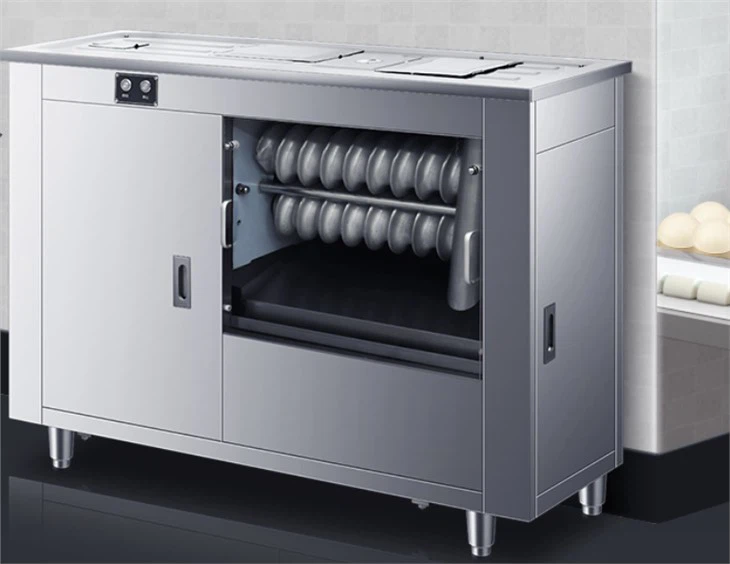

This type of kneading action helps to break up lumps and ensures that all ingredients are well - integrated. For example, when making whole - grain breads where there are more fibrous ingredients, a zig - zag kneading action can help to evenly distribute these elements throughout the dough. A Food Machinery Dough Divider Rounder with a zig - zag kneading option can be a valuable addition to a bakery that specializes in artisanal breads.
2. Factors Affecting Kneading Action Variation
Dough Consistency
The consistency of the dough is a major factor that influences the choice of kneading action. Soft and sticky doughs require a different approach compared to stiff and dry doughs. For soft doughs, a gentle kneading action like planetary kneading may be more suitable, as it can prevent the dough from sticking to the agitator and ensure an even mix.
On the other hand, stiff doughs, such as those used for some types of bagels or pizza crusts, may need a more aggressive kneading action like spiral or zig - zag kneading to develop the necessary gluten structure. If the kneading action is not appropriate for the dough consistency, the dough may not be properly mixed, and the final product may have an uneven texture.
Batch Size
The size of the dough batch also plays a role in determining the ideal kneading action. In a large - scale production environment, where batches can be several hundred kilograms, a powerful spiral kneading machine is often the best choice. The continuous and forceful action of the spiral agitator can handle large volumes of dough efficiently.
In contrast, for small - batch production, a planetary or a more delicate kneading mechanism may be sufficient. A small - scale bakery or a home baker may not need the same level of power and intensity as a large factory. Using a machine with an overly aggressive kneading action for a small batch could lead to over - kneading and a poor - quality final product.
Ingredient Composition
The ingredients in the dough can also affect the kneading action. Doughs with high - fat content, such as croissant dough, require a different kneading approach compared to lean doughs like white bread dough. The fat in the dough can coat the gluten strands, making them more difficult to develop. A gentle kneading action may be needed to prevent the fat from melting too quickly and to ensure that the gluten structure is still formed.
Similarly, doughs with a lot of added ingredients, such as nuts, fruits, or seeds, may need a kneading action that can evenly distribute these elements without damaging them. A zig - zag kneading action can be effective in this case, as it can move the dough around in a way that allows the ingredients to be incorporated without being crushed.
3. Impact of Kneading Action on Final Product Quality
Texture
The kneading action has a direct impact on the texture of the final product. A well - kneaded dough with the right amount of gluten development will result in a bread with a light and airy texture. For example, when using a spiral kneading machine to develop the gluten in a white bread dough, the bread will have a fine crumb structure and a soft, chewy texture.
In contrast, if the kneading is insufficient or inappropriate, the bread may be dense and heavy. Over - kneading can also lead to a tough and rubbery texture, as the gluten structure is over - developed and then broken down.
Flavor
Proper kneading can also enhance the flavor of the final product. When the ingredients are evenly mixed during the kneading process, the flavors can blend more effectively. For instance, in a fruit - filled dough, a good kneading action ensures that the fruit is evenly distributed, and the flavors of the fruit and the dough are well - combined.
The kneading process also allows the yeast to be evenly dispersed throughout the dough, which is crucial for proper fermentation. A well - fermented dough will have a more complex and delicious flavor compared to a dough that has not been fermented properly due to uneven kneading.
Appearance
The appearance of the final product is also affected by the kneading action. A dough that has been kneaded correctly will have a smooth and uniform surface. When baking bread, a well - kneaded dough will rise evenly, resulting in a symmetrical and aesthetically pleasing loaf.
In contrast, an improperly kneaded dough may have uneven rising, cracks, or a rough surface. This can be a major issue for bakeries that rely on the visual appeal of their products to attract customers.
4. Choosing the Right Dough Machine Based on Kneading Action
When selecting a dough machine, it's important to consider the specific needs of your bakery or food production facility. If you primarily produce large batches of bread with a consistent recipe, a Dough Mixer Commercial with a spiral kneading mechanism may be the best choice.
For a bakery that offers a wide variety of products, including cakes, pastries, and breads, a machine with multiple kneading options, such as a planetary and spiral combination, could be more suitable. A Small Dough Rounder Machine might be a great addition for small - scale operations, as it can handle different types of doughs with precision.
If you specialize in artisanal breads with unique ingredients and complex doughs, a Food Machinery Dough Divider Rounder with a zig - zag kneading option could provide the flexibility you need.
In conclusion, understanding how the kneading action of a dough machine varies is essential for achieving the best results in dough - based food production. As a dough machine supplier, we are committed to providing high - quality machines that can meet the diverse needs of our customers. Whether you are a small - scale bakery or a large - scale food manufacturer, we have the right dough machine for you. If you are interested in learning more about our products or would like to discuss your specific requirements, please don't hesitate to contact us for a procurement negotiation.
References
- Pyler, E. J. (1988). Baking Science and Technology. Sosland Publishing Company.
- Cauvain, S. P., & Young, L. S. (2006). Technology of Breadmaking. Woodhead Publishing.
